A write-up of my presentation on 'design debt'
Giving Justice Digital a shared language and practical toolkit for identifying and managing design debt.
The problem
Across Justice Digital, design quality was inconsistent - and nobody had a shared language for why, or what to do about it. Teams were accumulating design debt without realising it, firefighting problems that could have been prevented, and there was no framework for tracking or prioritising design issues over time. The word 'design debt' meant different things to different people, which made it almost impossible to have a productive conversation about it.
What I did about the problem
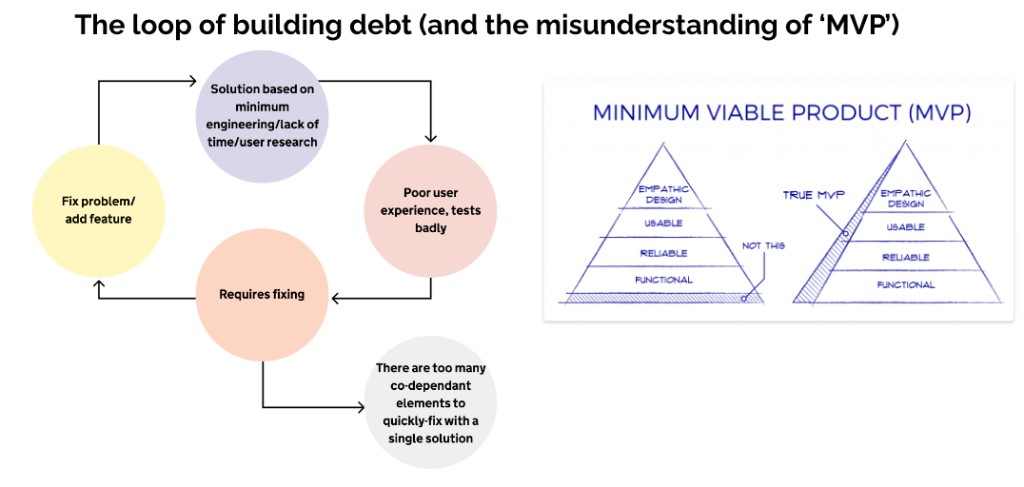
I researched and structured a community of practice session specifically to fix that. I broke design debt down into its three types - UX, visual, and operational - and explained how each one accumulates differently during agile delivery, what the symptoms look like in practice, and what the long-term risks are if it goes unmanaged. I didn't just diagnose the problem - I introduced practical frameworks teams could use immediately, including maintaining a design debt backlog and mapping debt impact against user journeys, so people left with tools not just theory.
What came out the other side
The Justice Digital design community had a shared language and a practical toolkit for identifying and managing design debt. It contributed to the broader UCD maturity work aimed at raising design quality and consistency across the organisation - and it came from one designer deciding the conversation needed to happen and making it happen.
What I learned
The most valuable design work isn't always on a screen. Sometimes the biggest impact you can have is giving a community the language to talk about a problem they've been feeling but couldn't articulate.